The Hidden Risk in Expansion Decisions
When manufacturers invest in new space, the assumption is simple:
“We’ll need this capacity for the long term.”
But in reality, demand is constantly changing.
A facility that solves today’s problem can easily become tomorrow’s excess capacity.
And once you build it, you’re committed.
The Cost of Getting It Wrong
Permanent expansion comes with long-term consequences:
- Capital tied up in fixed assets
- Underutilized space when demand shifts
- Limited ability to adapt to new strategies
This isn’t just a space problem – it’s a flexibility problem.
Rethinking Warehouse Investment
A new model is starting to emerge:
Treat infrastructure as something you can use, move, and even monetize – not just build
Instead of locking into permanent construction, manufacturers are choosing systems that allow them to stay agile.
What Redeployable Infrastructure Unlocks
With a modular, relocatable warehouse, companies can:
- Use capacity where it’s needed today
- Relocate it to another facility later
- Redeploy it for future projects
- Resell it when it’s no longer needed
That changes the investment entirely.
Instead of a sunk cost, it becomes a recoverable asset.
A Simpler Way to Think About It
Traditional model:
Build → Use → Be stuck
New model:
Deploy → Use → Scale, move or sell
This shift gives manufacturers:
- Greater control over capital
- Reduced long-term risk
- Flexibility to adapt as demand changes
The Anchor Warehouse Approach
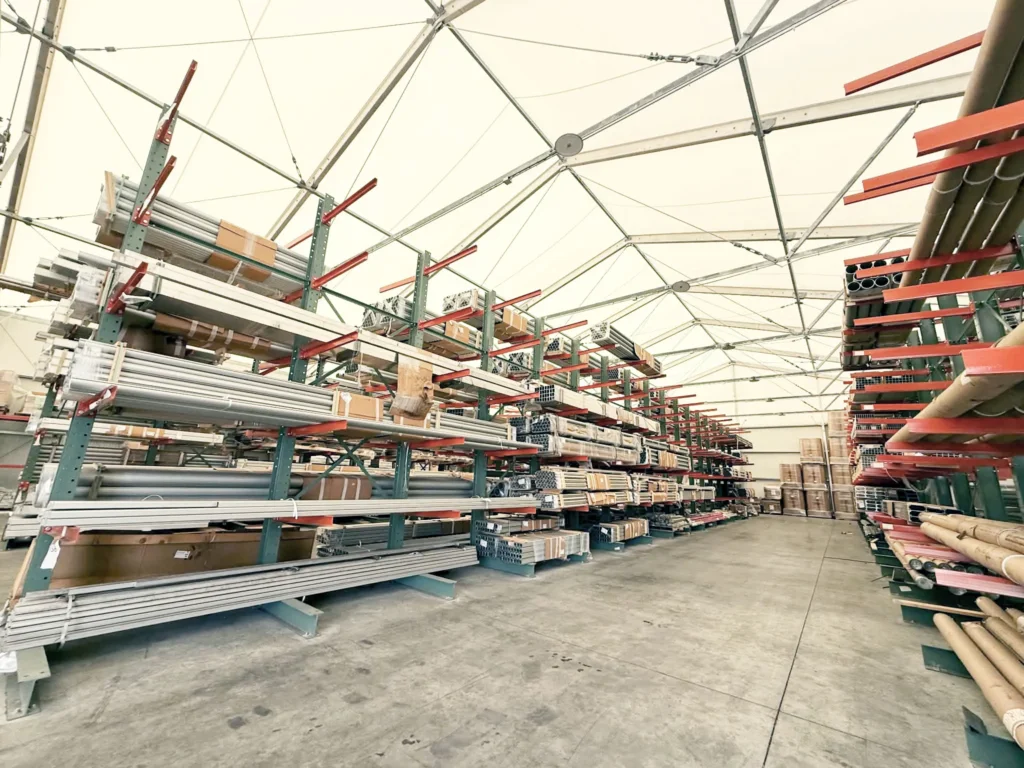
The Anchor Warehouse was built around this concept.
It provides:
- Permanent-building strength
- Rapid deployment timelines
- Full relocatability
- The ability to redeploy or resell the structure after use
The Bottom Line
The smartest manufacturers today aren’t just solving for capacity.
They’re solving for what happens after.
Because the best infrastructure investment isn’t just one that works today –
it’s one that still works when things change.
